
Living Lab Leipzig West
Industrial heritage meets energy sharing at the Baumwollspinnerei
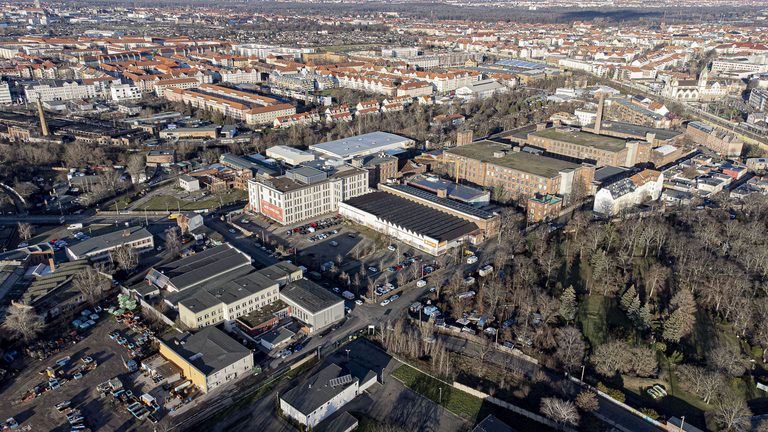
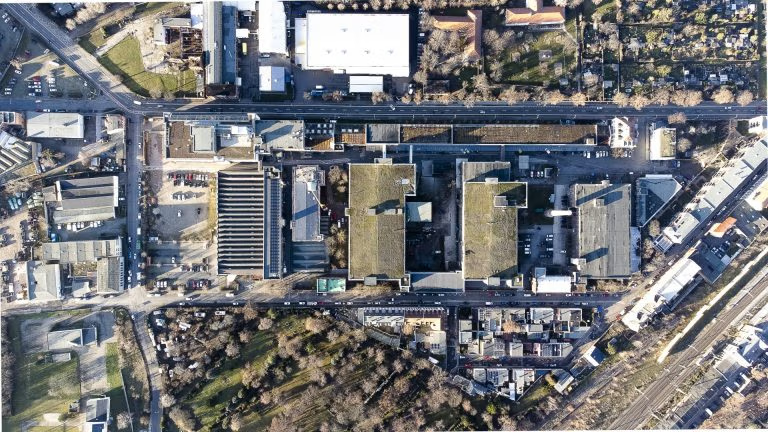
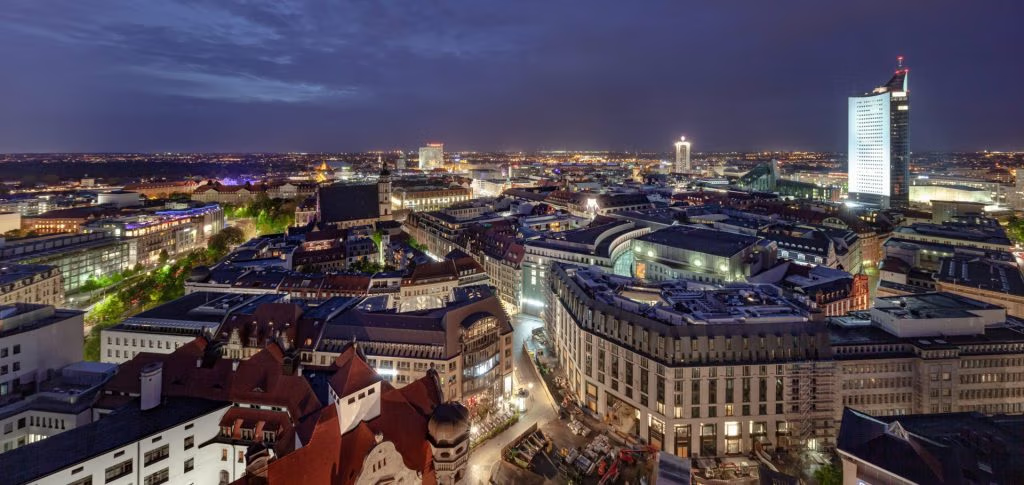
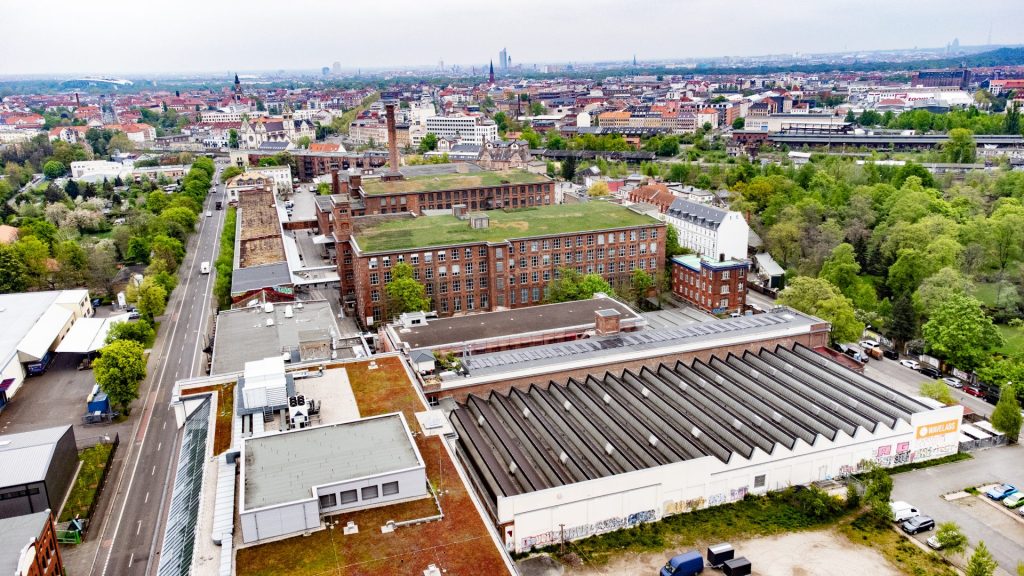
Leipzig West is a district where industrial heritage meets dynamic urban transformation. Once a hub of manufacturing, the area experienced economic decline following German reunification, leaving many buildings vacant for years. Today, the district is undergoing rapid change and at its heart sits the Leipziger Baumwollspinnerei.
Built in 1884 as the largest cotton mill in Europe, the Baumwollspinnerei has evolved into a vibrant hub for art, culture, and community. Its historic brick buildings now house over 100 art studios, 14 galleries, workshops, a theatre, a dance centre, cinemas, and non-profit institutions, all within a 100,000 m² site comprising 20 individual buildings.
Many of these buildings are under monument protection. They are architecturally significant yet energy-inefficient, creating a unique opportunity to explore how sustainability measures can be integrated into heritage-protected sites through on-site implementation and collaboration with local stakeholders.
The Living Lab serves as a practical testbed for sustainable urban redevelopment, focusing on energy efficiency, decarbonisation of heating systems, energy sharing, and the integration of digital monitoring tools. By engaging directly with building owners, tenants, and municipal stakeholders, solutions are not only tested for the community, but with the community.
Key Challenges: One of the greatest challenges in developing Positive Energy Districts in monument-protected areas is the lack of clear guidelines and regulations. In Germany, monument-protected projects are handled on a case-by-case basis with minimal guidance. Identifying the right contact person and establishing efficient communication is often difficult, leading to project delays and increased costs. Tenant communication requires careful handling. The Living Lab is primarily a commercially used property, and business owners are not always present on-site. Employees may not be as invested in participating. Engagement must be handled sensibly with communication coming from a trusted source.
Existing Energy Infrastructure
Within the preceding SPARCS project (Horizon 2020, 2019–2024), several PED solutions were already developed and implemented on site
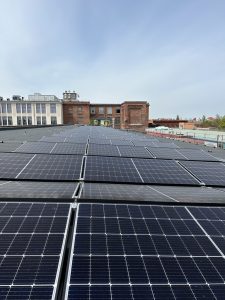
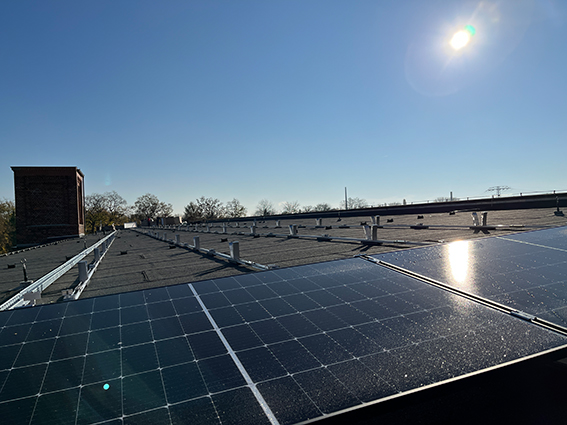
- 91 kWp photovoltaic system
- 50 kW lithium-ion battery for local energy storage
- LoRaWAN sensor network with digital meters enabling detailed monitoring of energy consumption and generation
- cenero.one energy management platform for visualisation and optimisation
- Intelligent heat demand control using smart radiator thermostats and automated valves to avoid unnecessary heating
- Bidirectional charging tested with load management, forming a microgrid
These existing installations provide a strong technical foundation for the MonuPED Leipzig West Living Lab to build on pursuing its three key objectives:
- Exploring energy sharing communities – Assessing the feasibility of shared heating and energy solutions that increase access to sustainable energy sources for local residents and improve resource efficiency.
- Data-driven retrofitting recommendations – Designing, testing, and validating a digital tool that provides the baseline for retrofitting recommendations to property owners ensuring alignment with both monument protection regulations and energy efficiency goals.
- Effective stakeholder collaboration – Establishing collaboration among all stakeholders to create a solid foundation for innovation and sustainable transformation, without compromising the district’s cultural and architectural heritage.
The Living Lab aims to pave the way for future projects by setting an example of best practices, highlighting challenges and corresponding solutions, and fostering collaboration across a wide range of stakeholders
Connection to MonuPED Work Packages
The The Leipzig West Living Lab serves as the testing ground for three tools and concepts developed in WP4
WP4 Tool / Concept | Description |
Thermal Precision Profiling | A digital tool using sensor data to create detailed thermal profiles of buildings, enabling data-driven recommendations for lowering flow temperatures and connecting to low-temperature district heating networks |
Neighbourhood Heating Storage System concept | A feasibility study for a shared communal geothermal heat storage system, evaluating legal frameworks and the potential for geothermal drilling in public spaces |
Leipzig Energy Map | A GIS-based tool mapping energy-relevant data across the city, supporting strategic decision-making for energy retrofits and district planning |
Cross-site collaboration is also planned with the Pinkafeld case study (Austria), where a digital tool with a similar focus on building performance analysis is being developed for a specific use case building. By comparing methodologies and user engagement approaches, both sites benefit from mutual learning.
The Living Lab also feeds into WP2 (documenting challenges, ownership structures, and regulatory barriers) and WP3 (testing co-investment concepts and documenting regulatory hurdles in real cases).

Living Lab Leads
Contact by email for further information
City of Leipzig