
Case Studies: Koper and Pinkafeld
Digital tools for heritage protected areas in Slovenia and Austria
In addition to the three Living Labs in Leipzig, Prague, and Alba Iulia, the MonuPED project includes two case studies where digital tools are developed and applied in heritage-protected contexts. While these locations are not formal Living Labs with their own stakeholder engagement roadmaps, they contribute essential tools to the MonuPED Toolkit and are reflected with selected stakeholders for feedback and validation.
The two case studies represent very different scales and contexts. Koper a coastal Mediterranean old town in Slovenia and a small-town municipal building in Pinkafeld Austria. Yet both confront the same fundamental challenge: how to advance energy transition in buildings where heritage protection constrains conventional approaches.

Koper
Koper is located on the north-western coast of Istria, at the mouth of the Rižana River (historically the Badaševica), on what was once an island. The origins of the settlement date back to Roman times, when Istria was part of the Roman Empire. The settlement evolved through Byzantine rule (known as Justinopolis), the Patriarchs of Aquileia (Caput Histriae), and Venetian rule (Capo d’Istria).
By the late 13th century, the urban structure was well established, main streets, squares, and public spaces laid out in an elliptical plan resembling a convex lens, with the highest elevation at the main square in front of the cathedral. The town includes both religious and secular architecture; palaces and typical Mediterranean urban houses arranged along streets and clustered around two central squares (Titov trg and Brolo) and eight peripheral squares.
The prevailing construction materials are stone, brick, and mortar. Most buildings have very thick outer walls, the main structural and load-bearing elements. Floor dividers were mainly wooden, often with gravel filling. The roofing structure is typically Mediterranean; wooden beams as support with characteristically shaped clay shingles. The most prevalent roof incline is approximately 24 degrees, as the shingle shape and installation technology precluded steeper angles.
The salt pans, once integral to Koper’s economy, have been repurposed for sports and recreational use. Today, the Old Town is located in close proximity to the city’s port, a detail that becomes relevant for the virtual energy community approach.
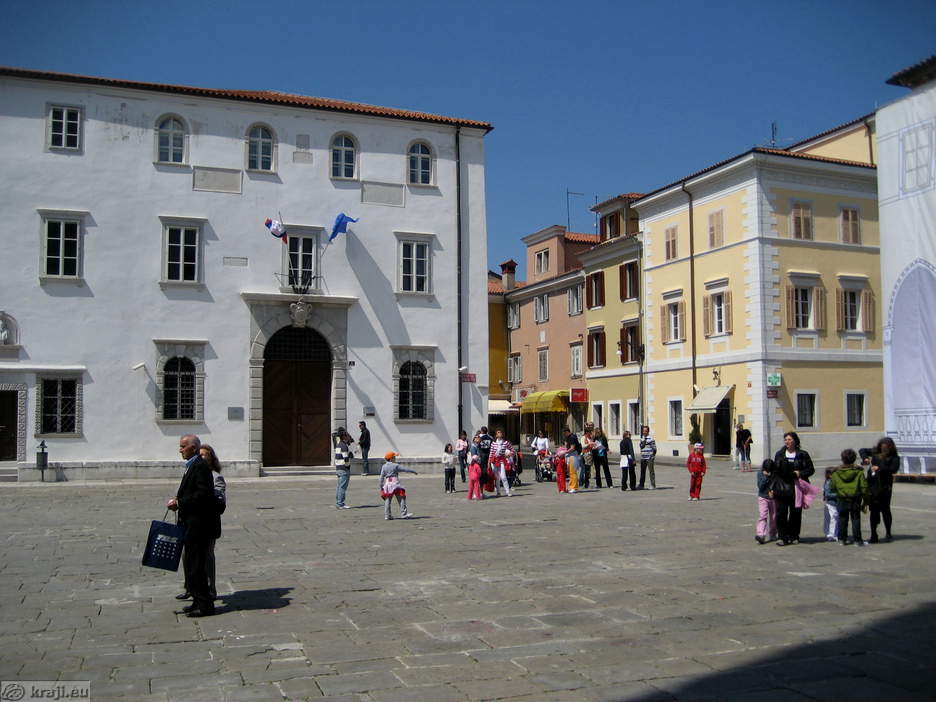
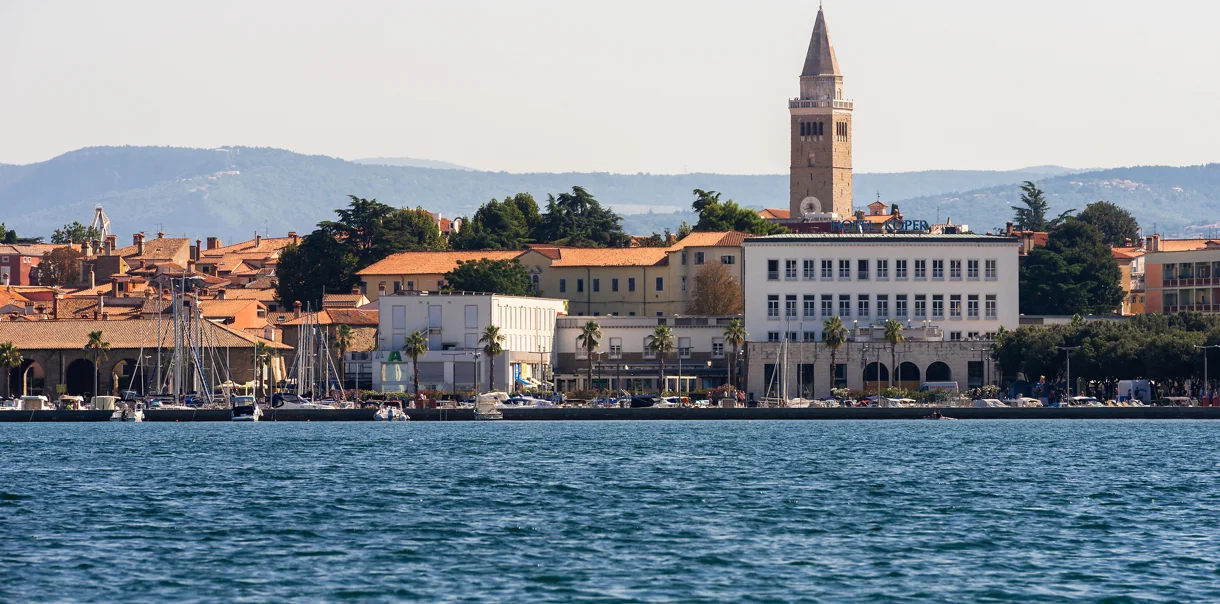
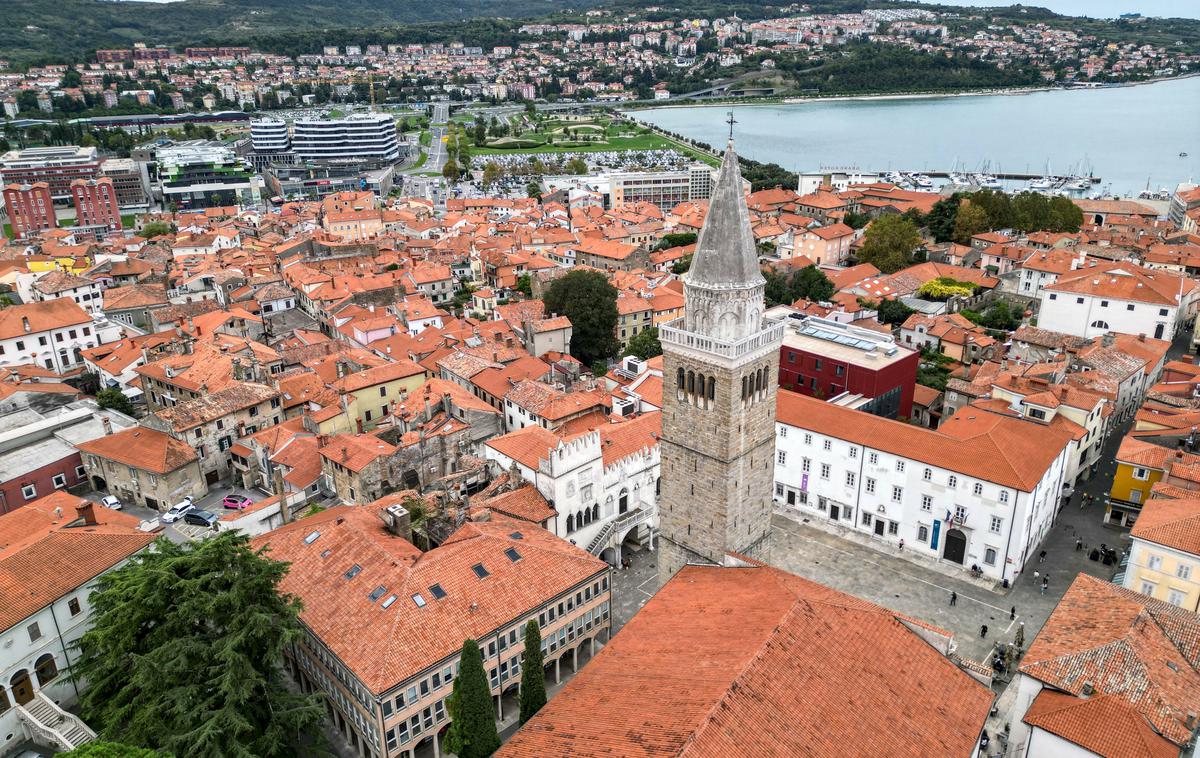
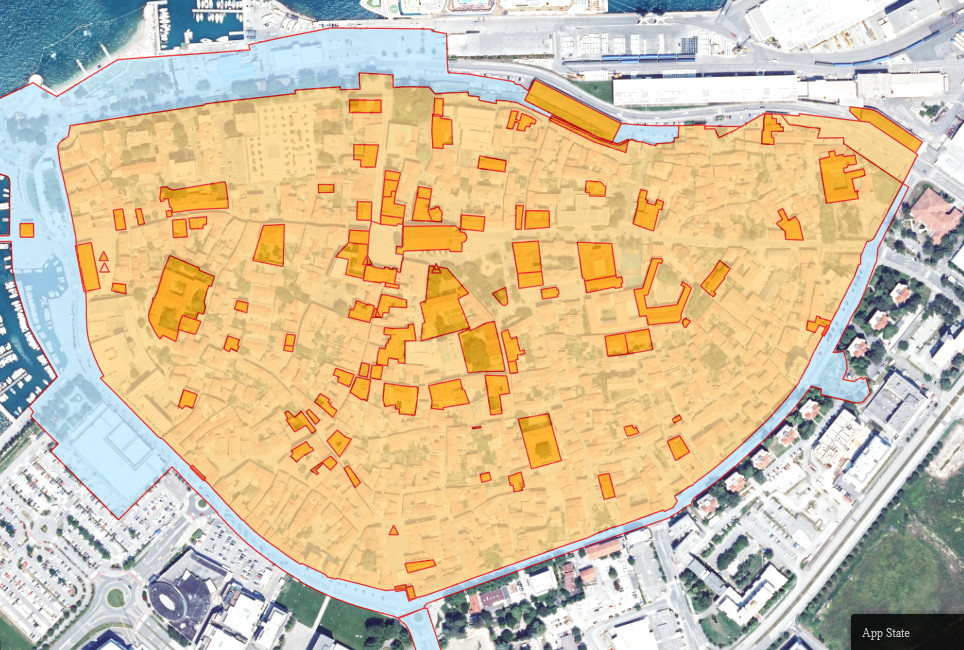
Key challenges for deploying PED solutions in Koper’s historical centre involves specific constraints:
Heritage approval requirement: All buildings in the historical centre are considered a cultural monument of local importance. Any intervention — retrofitting, reconstruction, demolition — must be approved by the Institute for the Protection of Cultural Heritage of Slovenia (ZVKDS). The area is also on the “red” list of archaeological zones.
Ruled-out technologies: Geothermal energy production is not possible due to archaeological constraints. Wind-generated electricity is excluded because turbines and columns cannot be aesthetically incorporated into a heritage-protected area.
The pivotal role of roof retrofitting: In Mediterranean historic towns where thick stone walls offer reasonably good thermal insulation and phase delay, roof retrofitting becomes the most impactful intervention for improving building energy efficiency — reducing energy loss through better insulation and sealing air leaks.
PV potential: Photovoltaic panel installation may be permitted by cultural heritage authorities when it can be done without negatively impacting building structures or material composition (i.e., fully reversible) and when panels are not visible from the streets. Where on-site PV is not permissible, energy-community installations can provide off-site renewable electricity. Koper is a promising candidate for this approach, as the Old Town sits in close proximity to the port, where large rooftop and infrastructure areas could host PV panels.
The HeritSage Tool — Digital Twin for Urban Heritage Areas is being developed for the Koper case study and is an agent-based model that simulates simulates citizen engagement in creating a net-positive energy district that is protected by cultural heritage preservation regulations.
Pinkafeld
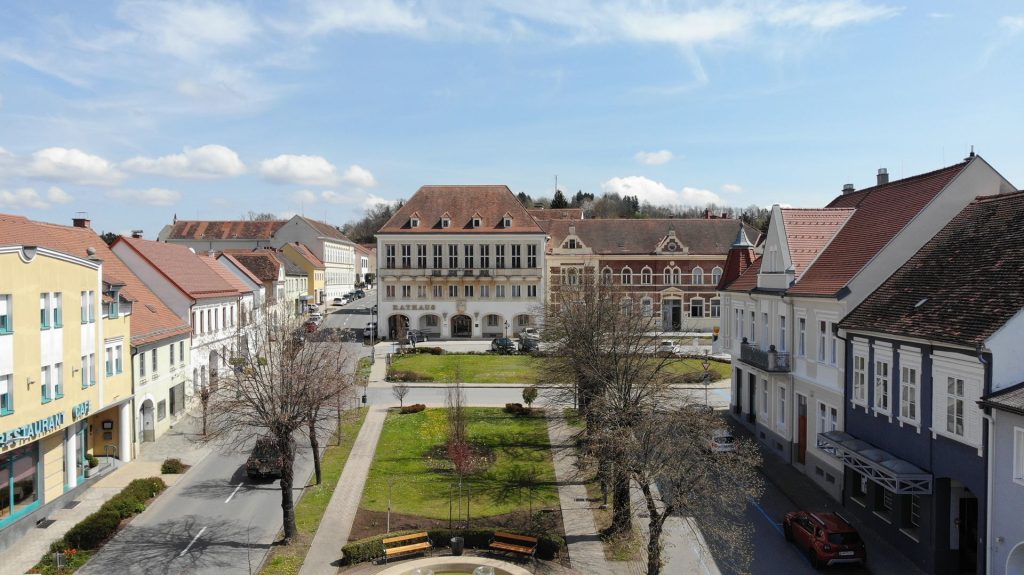
The City Hall of Pinkafeld is centrally located on the main square of Pinkafeld, a small town in Burgenland, Austria, home to approximately 6,000 residents. Built between 1951 and 1954 in the typical Pannonian style, the building features round arches and an alley, blending historical architectural elements with more recent renovations.
The City Hall houses the offices of the mayor, municipal council, and various administrative departments, serving as the primary point of contact for citizens and local businesses. The surrounding area reflects the town’s modest scale and community-oriented urban fabric, with limited high-rise development.
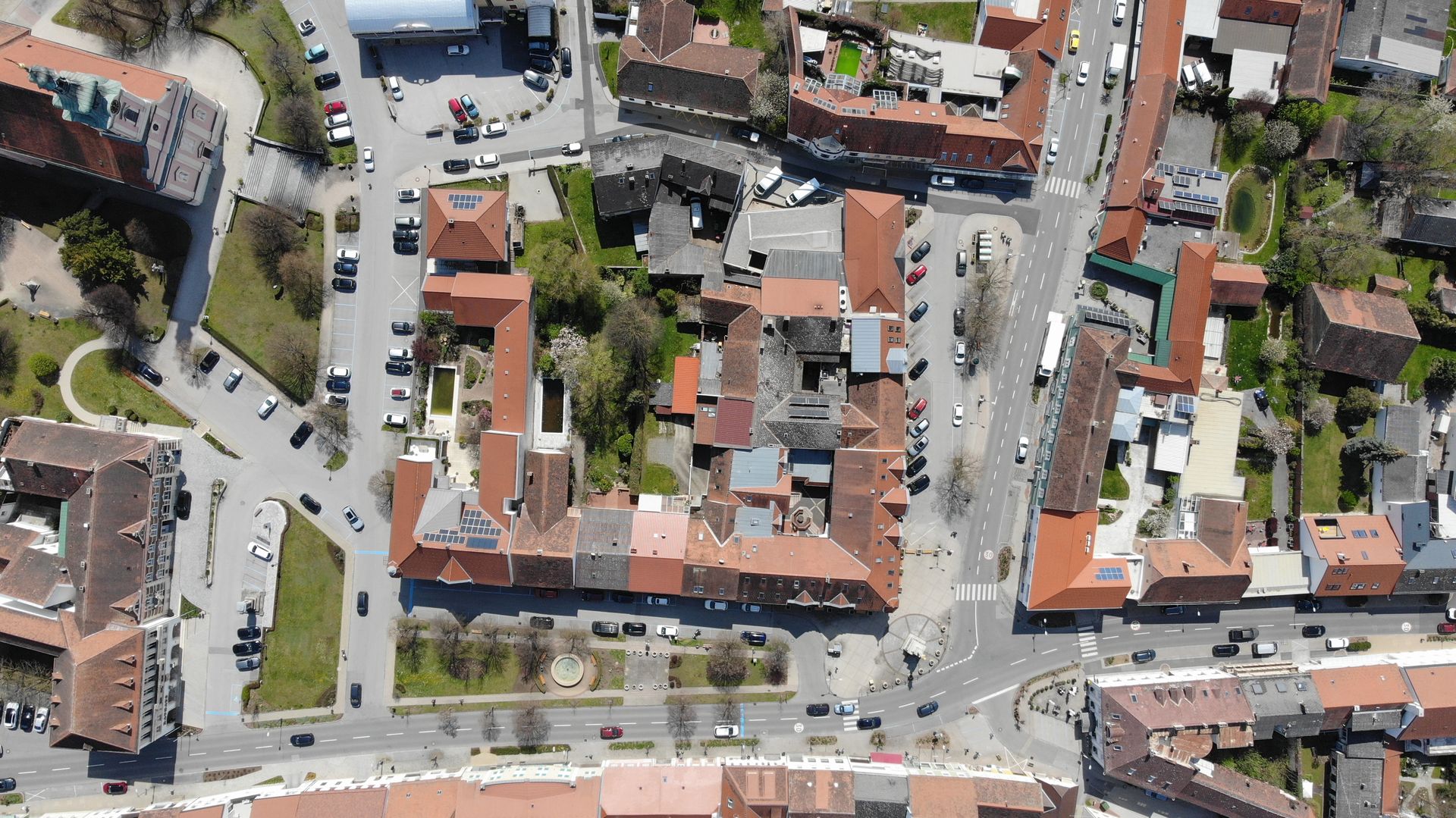
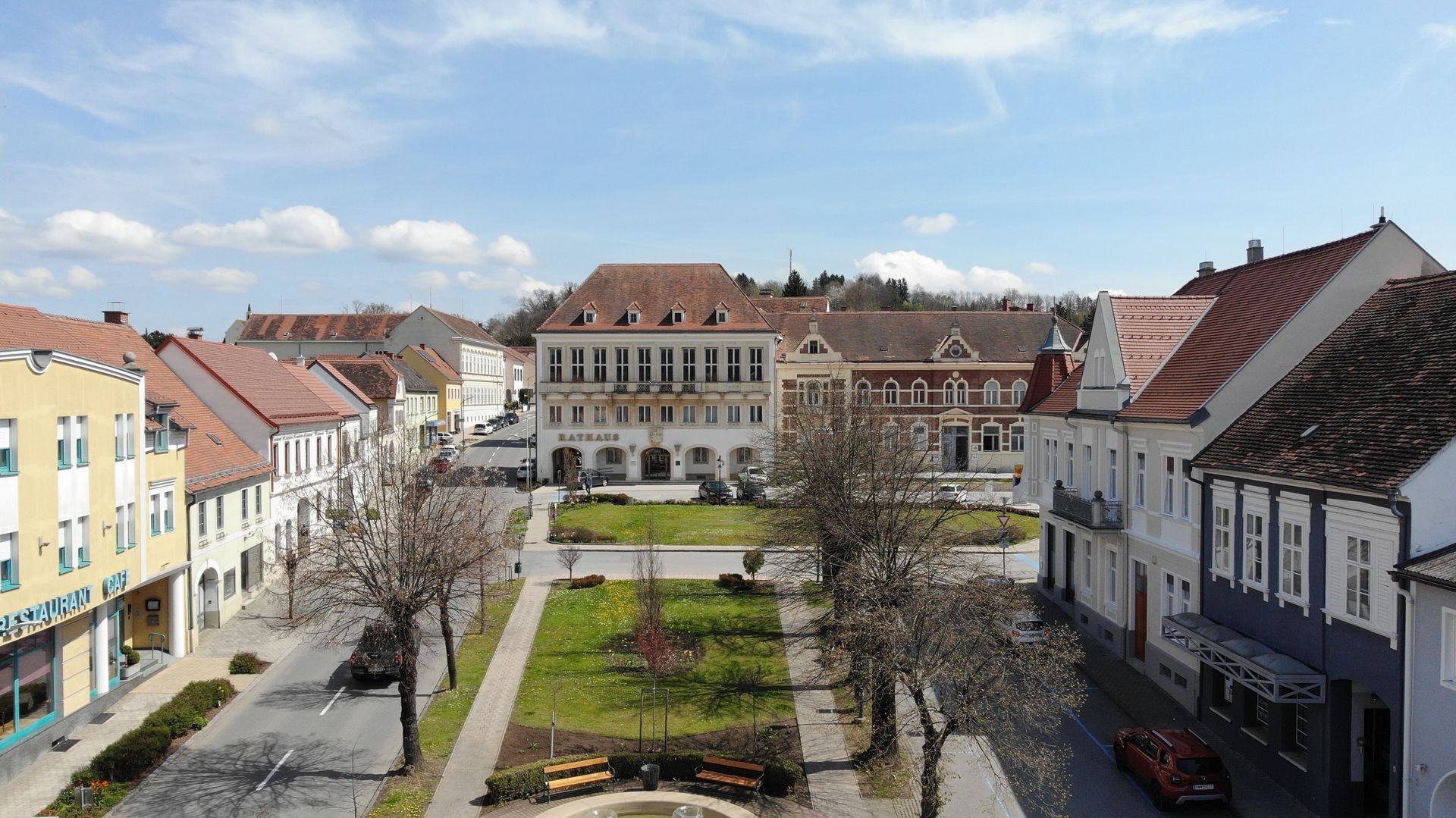
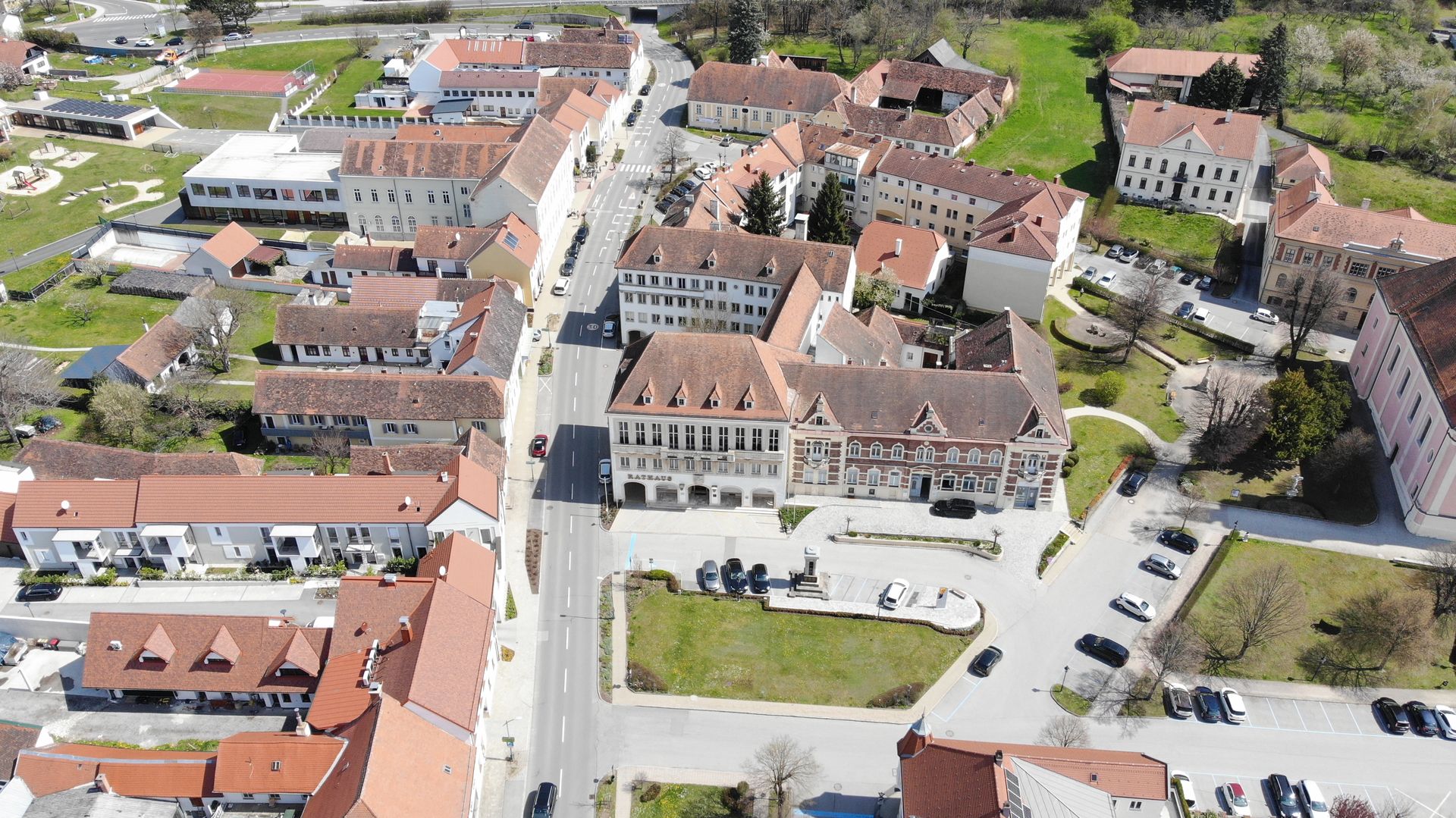
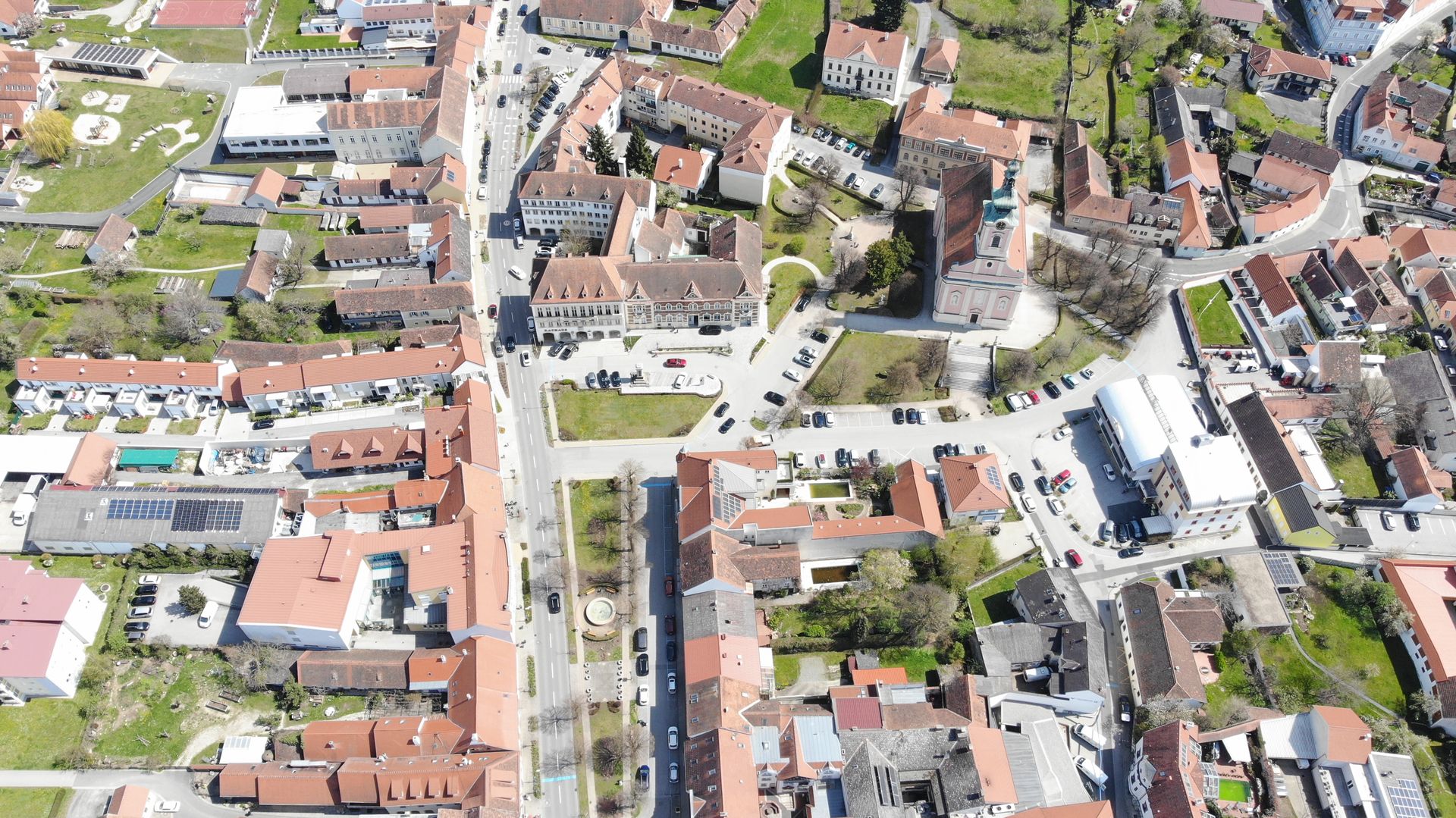
For deploying Positive Energy District solutions at Pinkafeld’s City Hall involves several specific challenges:
Energy efficiency constraints: The building’s older sections and heritage features limit the extent of structural modifications possible for energy upgrades.
Spatial limitations: The compact site and preservation requirements restrict the installation of large-scale renewable energy systems such as photovoltaic panels.
Aging infrastructure: Integrating smart energy systems is complicated by outdated electrical and heating infrastructure in the City Hall.
Stakeholder engagement: The PED concept is relatively new to many local actors, necessitating targeted awareness and capacity-building efforts.
Regulatory and policy barriers: Heritage protection laws and municipal regulations can slow or complicate the implementation of innovative energy solutions.
The Heritage Optimiser Tool — Digital Tool for Pinkafeld is being developed for the Pinkafeld City Hall as a specific use case building. This tool shares methodological DNA with the Thermal Precision Profiling tool being developed in Leipzig — both focus on improving building performance by collecting, analysing, and simulating detailed energy consumption data, and both aim to provide targeted recommendations for building owners regarding retrofitting and efficient energy use.

Case Study Leads
Koper Case study in Slovenia is led by partner ZVKDS
Contact: Crtomir Tavzes → crtomir.tavzes@zvkds.si
Pinkafeld Case Stydy in austria is led by partner Forschung Burgenland GMBH
Contact: Lukas Unterpertinger