
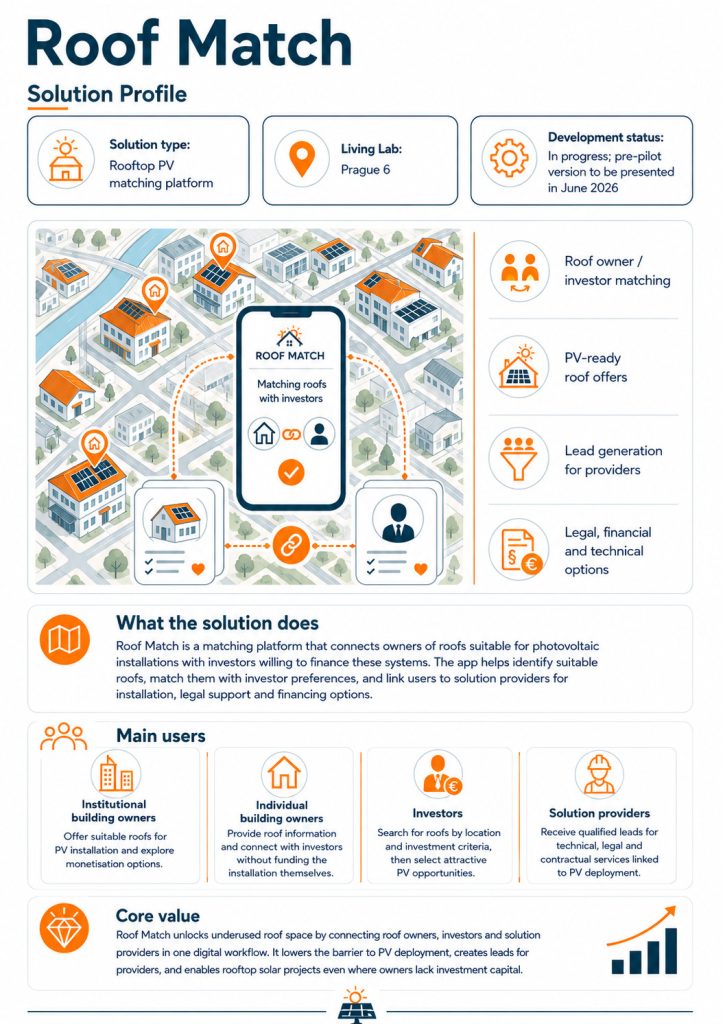
RoofMatch App
Overview
The Roofs & Facades Study develops a workflow for assessing the visibility of renewable energy installations, such as PV panels or solar thermal collectors from near and far viewpoints in heritage-sensitive urban contexts. The study determines whether and how such installations can be placed on historic roofs and facades without compromising the architectural character of monument-protected buildings and areas.
The study leverages the position of the CTU university campus within Prague 6, allowing proposed workflows to be tested on-site. Computer simulation results on visibility from various viewpoints are confirmed through real-world observation and discussed with local monument protection authorities.
The outcome is a practical, validated methodology that helps planners and building owners determine heritage-compliant installation options, supporting the shift from blanket prohibitions to evidence-based, case-specific decisions.
The Challenge It Addresses
- Regulatory: Heritage authorities often reject renewable energy installations on visibility grounds. The study provides objective, data-driven visibility assessments to support more nuanced decisions.
- Technical: Determining actual visibility from key viewpoints — streets, squares, distant vantage points requires systematic analysis rather than guesswork.
- Stakeholder: The study creates a common evidence base for discussions between building owners, architects, and monument protection authorities.
How It Works
The study follows a structured workflow:
- Site analysis: Documenting the building’s roof and facade geometry, surrounding urban context, and key viewing corridors
- Computer simulation: Modelling installation options (panel placement, size, tilt) and calculating visibility from defined near and far viewpoints
- On-site validation: Confirming simulation results through physical observation at the CTU campus in Prague 6
- Authority consultation: Discussing findings with local monument protection authorities to validate the methodology and results
Key outputs:
- Validated visibility assessment methodology
- Per-building installation option matrices (what can go where, under what conditions)
- Heritage-compliant retrofit guidelines.
Where It’s Developed: Living Lab Prague 6 — tested at the CTU university campus, with results discussed with local monument protection authorities.